Copper-binding tripeptide complex formed from alanine, histidine and lysine
PRODUCT PROFILE
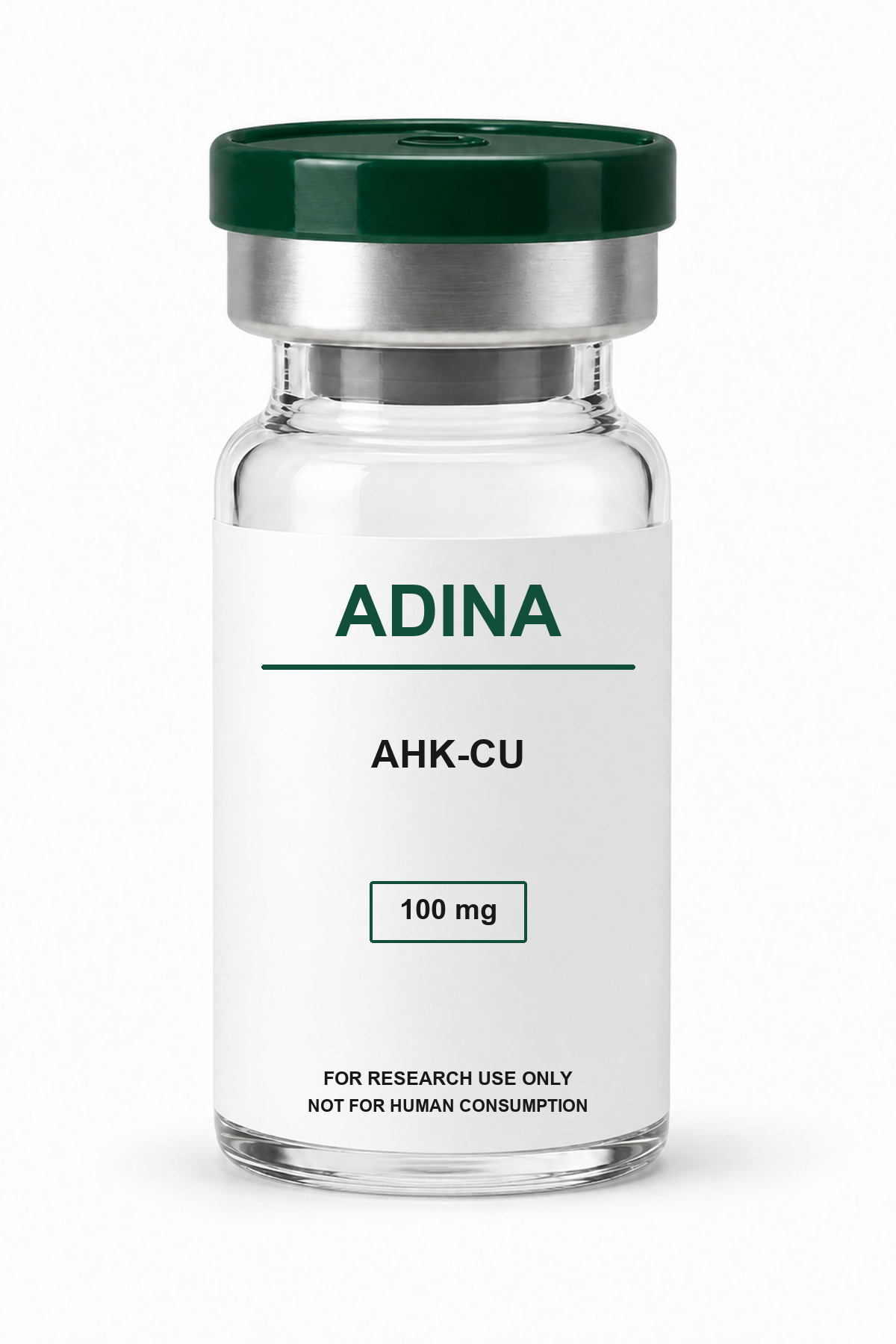
AHK-CU
£40.99
AHK-CU is copper-binding tripeptide complex formed from alanine, histidine and lysine. Researchers examine it in relation to dermal papilla cells, follicle biology and copper-dependent tissue signalling.
Why it is distinct
AHK-CU uses the alanine–histidine–lysine sequence and has a narrower hair-follicle research record than the more widely studied GHK-Cu copper peptide.
- Evidence stagePreclinical
- AvailabilityAvailable · 50 in stock
- Batch recordPublished after verification
- DispatchConfirmed at checkout
50 in stock
PRODUCT INFORMATION
Clear first. Detailed when needed.
What this material is+
AHK-CU is copper-binding tripeptide complex formed from alanine, histidine and lysine. Researchers examine it in relation to dermal papilla cells, follicle biology and copper-dependent tissue signalling.
Research focus+
Researchers study whether it can support the cells around hair follicles, help follicles stay active and encourage healthier-looking hair growth in laboratory models. Most research has been done on cells or isolated hair follicles, so benefits in people are not yet proven.
How the mechanism differs+
Binds copper and has been studied for effects on dermal-papilla-cell proliferation, survival signalling and ex vivo hair-follicle elongation.
Evidence and limitations+
Evidence is centred on cultured-cell and ex vivo human hair-follicle research. Independent replication, controlled clinical efficacy and long-term safety evidence are limited.
Testing and batch documentation+
No live certificate is shown for this staging item. ADINA will only publish a batch document after the product identifier, test method and result have been checked.
RESEARCH PROFILE
Understand the distinction.
Researchers study whether it can support the cells around hair follicles, help follicles stay active and encourage healthier-looking hair growth in laboratory models. Most research has been done on cells or isolated hair follicles, so benefits in people are not yet proven.
Binds copper and has been studied for effects on dermal-papilla-cell proliferation, survival signalling and ex vivo hair-follicle elongation.
AHK-CU uses the alanine–histidine–lysine sequence and has a narrower hair-follicle research record than the more widely studied GHK-Cu copper peptide.
Evidence is centred on cultured-cell and ex vivo human hair-follicle research. Independent replication, controlled clinical efficacy and long-term safety evidence are limited.
Educational research context only. This information is not dosage, administration or personal-use guidance.
CONTINUE EXPLORING
Related research perspectives.
Selected for useful comparison across neighbouring or contrasting research areas—not as combined-use guidance.
-
Early human evidence
Acetyl Tetrapeptide-3
£37.0010 mgBatch file pendingScalp/follicle matrix focus distinguishes it from SNAP-8’s expression-line mechanism and GHK-Cu’s copper biology.
UnavailableAsk about availability -
Early human evidence
SNAP-8
£35.0010 mgBatch file pendingA topical neurotransmitter-release-mimetic cosmetic peptide rather than a matrix-remodelling peptide.
UnavailableAsk about availability -
Early human evidence
Pal-GHK
£38.0010 mgBatch file pendingPalmitoylation—not copper binding—is the defining modification.
UnavailableAsk about availability -
Phase 2 clinical research
GHK-Cu
£24.99Batch file pendingGHK-Cu is a copper complex. Pal-GHK has a fatty tail for topical formulas, while non-copper peptides use different…
Available · 50 in stockAdd to basket